
How to Write a Message That Feels Genuinely Personal
A practical guide to writing warm, specific messages that sound like you and make the recipient feel seen.
Useful ideas for thoughtful words, welcoming gatherings, and everyday spaces that work beautifully.

A practical guide to writing warm, specific messages that sound like you and make the recipient feel seen.

How to make everyday texts clearer, kinder, and more human without turning every message into an essay.

A low-stress approach to choosing a restaurant, coordinating guests, and making a shared meal feel easy.
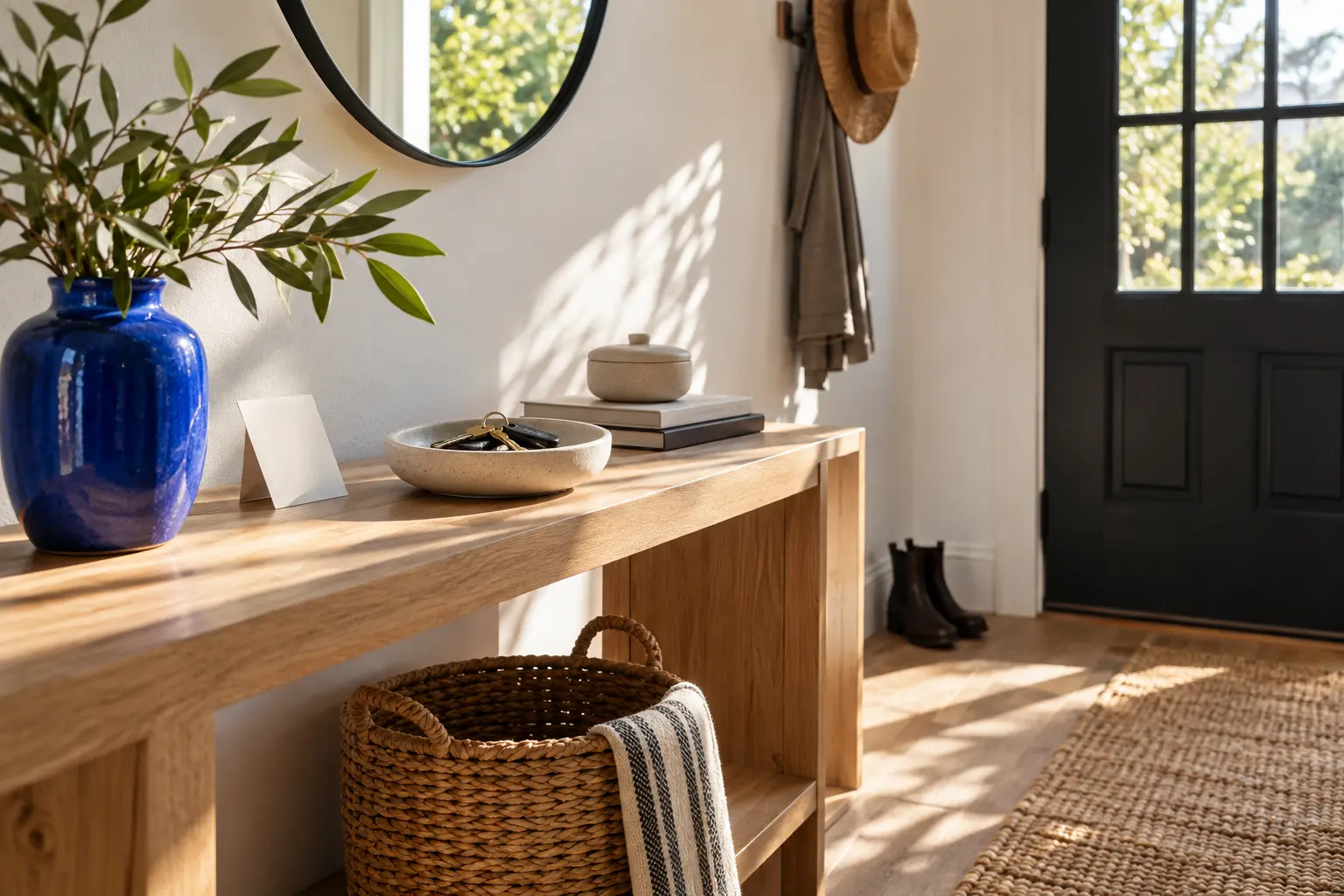
Use placement, contrast, sequence, and cues to make ordinary rooms and routines easier to use.

Build a personal, practical care package that fits the recipient, travels safely, and communicates real attention.
The objects, words, and routines that surround us quietly shape how a day feels. Thoughtful design is not limited to beautiful rooms or polished products. It appears in a message that arrives at the right moment, a gathering planned around everyone’s comfort, and a simple system that makes the next step easier.
Thoughtful living begins with attention. It asks us to notice what people need, how spaces are used, and where ordinary friction repeats. The response does not need to be dramatic. A chair moved into better light, a clearer invitation, or a sincere two-sentence note can change an experience.
This approach is practical rather than performative. It does not require a perfect home, a rigid morning routine, or constant generosity. It makes room for tired days and changing circumstances. The test is simple: does this choice make life clearer, kinder, or easier for the people involved?
Design starts before decoration. Watch how a task actually unfolds. Where does it slow down? What information is missing? Which object is always misplaced? The small gap between intention and behavior often contains the best opportunity.
In an entryway, keys may repeatedly land on the nearest flat surface. Instead of expecting a new habit, put a tray there. In a group invitation, guests may keep asking about cost or timing. Include those details at the beginning. In a difficult conversation, advice may arrive before the other person feels heard. Ask whether they want listening or problem-solving.
Observation prevents us from solving imaginary problems. It also makes the result more personal. A system built for real behavior requires less effort to maintain than one copied from a photograph.
Words create an environment too. They can reduce uncertainty, offer dignity, and tell someone they are not alone. The most effective messages are often specific and modest: they name what happened, recognize the person’s experience, and offer a clear next step.
Consider the difference between “Let me know if you need anything” and “I’m going to the grocery store Thursday; may I leave dinner at your door?” The first expresses care, but asks the recipient to identify and organize help. The second turns care into an easy choice.
Celebration also benefits from detail. Instead of praising someone as simply talented, mention the patience you saw during practice or the courage required to begin again. A specific observation tells the recipient that their unseen effort was noticed.
Research summarized by Harvard Health Publishing describes an association between gratitude and well-being, while also noting limits in what individual studies can prove. We do not need to turn appreciation into a productivity technique. Its human value is enough: gratitude helps us name the good we receive and recognize its source.
When an occasion feels important, people often reach for formal language. The result can sound distant from the actual relationship. Start with the sentence you would say face to face. Then add one memory, quality, or hope.
A reliable pattern is: acknowledge the moment, provide one concrete detail, explain why it matters, and close with a wish or offer. For example: “Congratulations on opening the studio. I remember you sketching the first layout at our kitchen table two years ago. Your persistence has changed an idea into a place people can enter. I hope opening week gives you a quiet moment to see what you built.”
Editing should preserve warmth. Remove repeated ideas and phrases you would never say. Check names. Read the note aloud. If it could be sent to anyone, add a detail. If it feels too long, keep the most honest line.
A gathering feels relaxed when the practical questions have already been answered. Guests know when to arrive, what the setting is like, what they may spend, and whether they should bring anything. Accessibility and dietary needs are part of hospitality, not an awkward extra.
The host’s job is not to control every minute. It is to create conditions in which people can connect. Choose a room where conversation is possible. Leave a little margin around the schedule. Introduce guests through shared interests. Let the meal or activity provide structure without demanding constant participation.
Money deserves plain language. If the host is paying, say so. If costs will be shared, make that clear before the event. Unspoken expectations create far more discomfort than a friendly direct sentence.
Rooms work best when they reflect the sequence of life inside them. Store objects near the point of use. Give frequent items the easiest reach. Use contrast to make important tools or controls visible. Leave enough open space for a task to happen.
Good systems also recover quickly. A home will become untidy. A desk will collect papers. A schedule will change. Instead of aiming for permanent order, create an obvious reset: one basket for items moving upstairs, one place for incoming mail, one weekly block for administrative tasks.
Accessibility improves ordinary experience. A seat near the door helps someone tie shoes while holding a bag. Captions make a video usable in a noisy kitchen. A larger label helps in dim light. The goal is not a theoretical average user; it is the range of people who may use the space.
Limitations can clarify a decision. A small budget encourages attention to placement, repair, and reuse. A short message forces the writer to find the sentence that matters. A small table invites a simpler menu and closer conversation.
Before purchasing, try a reversible experiment. Move furniture with felt pads. Test a drawer divider made from spare boxes. Draft the invitation and ask one person what remains unclear. A week of real use provides better evidence than an hour of imagining.
Constraints also protect energy. Decide the maximum number of guests you can host comfortably, how much time you can give a project, or which communication channel you check after work. A boundary can make care sustainable.
Personalization is not adding a name to a generic object. It is selecting a detail that reflects the recipient’s preferences, history, or current need. A friend who dislikes clutter may appreciate a consumable gift. A new parent may need a meal more than flowers. A distant relative may value a printed photograph with a caption that preserves the story.
The same principle applies to digital communication. Match the channel to the person. Some people love voice notes; others find them difficult to access. Some want frequent small check-ins; others prefer a planned, unrushed call. Thoughtfulness includes asking rather than assuming.
Set aside twenty minutes once a week to look across three areas: space, connection, and plans. Choose one repeated annoyance in your environment and make a small adjustment. Think of one person who may need encouragement or thanks, and send a specific note. Review the coming week for a meal, appointment, or gathering that would benefit from earlier preparation.
Keep the reset intentionally small. It is not a complete life review. Its purpose is to catch details before they become stress and to move care from intention into action.
Care can turn into hesitation when every choice must be perfect. If you keep rewriting a message, choose the clearest sincere version and send it. If planning a dinner becomes an optimization project, select the option that meets the group’s core needs. If a home system requires dozens of matching containers, test the arrangement before buying them.
Thoughtfulness should reduce burden, not create a new standard to fail. Ask whether more analysis will materially improve the experience. If not, proceed with kindness and allow for correction.
Thoughtful design is also a form of cooperation across time. The person who fills the water bottle at night helps the person rushing in the morning. The person who writes the appointment details in one place helps the person arriving next month. The person who saves a template for a repeated task gives attention back to a busy week.
This is not about maximizing every minute. It is about moving a small amount of effort to the moment when it costs less. Wash the tools while food cooks. Add an item to the shopping list when the last one is opened. Put the return by the door before the deadline becomes urgent.
Future care should include pleasure as well as administration. Save a free evening before the calendar fills. Keep ingredients for one easy meal. Put a book where you tend to sit. Preparation can create room for rest.
Many high-value changes cost little or nothing. Rearranging, labeling, repairing, sharing information, and speaking clearly are forms of design. A well-timed message may matter more than a purchased gift. A potluck can be more welcoming than a formal meal if expectations are clear and every guest can participate.
When spending is helpful, buy for the actual need. Pay attention to durability, repair, storage, and ongoing cost. An inexpensive object used daily may deserve more research than a decorative item used once. Borrow or test when possible.
A budget is not an apology. State it plainly when planning with others. Honest limits allow everyone to make informed choices and prevent generosity from becoming resentment.
No system, message, or gathering will work perfectly. Thoughtful living includes the ability to notice harm and repair it. If your wording was careless, apologize without asking the hurt person to reassure you. If a plan excluded someone, learn which assumption caused it and change the next invitation. If a household setup fails, revise the environment before blaming willpower.
Repair works best when it is proportionate and concrete. Name the issue, acknowledge the effect, take responsibility, and describe the change. Then allow the other person to decide what they need.
Objects can be repaired too. Mending, sharpening, tightening, and cleaning renew usefulness and deepen familiarity. Not everything must be saved, but replacement should be a decision rather than a reflex.
The quality of an answer depends on the question. Instead of “How do I make this perfect?” ask “What would make this easier to use?” Instead of “What should I say?” ask “What is true, kind, and appropriate to this relationship?” Instead of “What does a good host provide?” ask “What will help these particular guests feel at ease?”
Good questions turn attention outward while respecting limits. They invite observation and conversation. They also leave space for more than one successful answer.
When another person is involved, ask directly. “Would a call or a text be easier?” “Do you want company or quiet?” “Is there a restaurant where you can order comfortably?” Preference is better evidence than guesswork.
Thoughtful choices become easier when you know what “enough” looks like. Enough preparation might mean the address is confirmed, dietary needs are known, and the table is clean—not that every course is homemade. Enough editing might mean a message is accurate and sincere—not that every sentence sounds literary. Enough order might mean you can find what you need—not that no object remains visible.
A standard of enough protects the purpose from perfectionism. Write it before a demanding task: three conditions that would make the result useful and respectful. When those conditions are met, stop adding complexity. This leaves energy for the people and moments the design is meant to serve.
Enough can change. A healthy week may hold more cooking and social time than a week shaped by illness, deadlines, or caregiving. Adaptation is not failure; it is evidence that the plan responds to life.
Thoughtful environments depend on planning, remembering, purchasing, cleaning, scheduling, and emotional attention. When one person carries this invisible work, a beautiful result may conceal an unfair process. Make responsibilities visible and divide ownership, not just isolated tasks.
Ownership means noticing when something needs to happen, making the decisions, and completing the follow-through. “Tell me what to do” still leaves another person managing the system. A shared list, calendar, or recurring responsibility can distribute both action and attention.
In groups, name contributions. Thank the person who booked, drove, checked accessibility, brought food, or followed up. Recognition helps care remain reciprocal rather than assumed.
A well-designed day is not a sequence of photogenic moments. It contains missed buses, untidy counters, changed plans, and messages answered late. Thoughtful choices do not eliminate that reality. They create small supports within it.
Put the needed object where the action happens. Give people the information they need before asking for a decision. Say the specific kind thing while it is still timely. Make offers that are easy to accept or decline. Leave room for different bodies, preferences, and seasons of life.
That is the quiet promise behind Just Be Design: beauty with a job to do, words grounded in truth, and ordinary experiences shaped with attention. Begin with one point of friction or one person you care about. Notice closely. Make the smallest useful change. Then see what becomes easier.