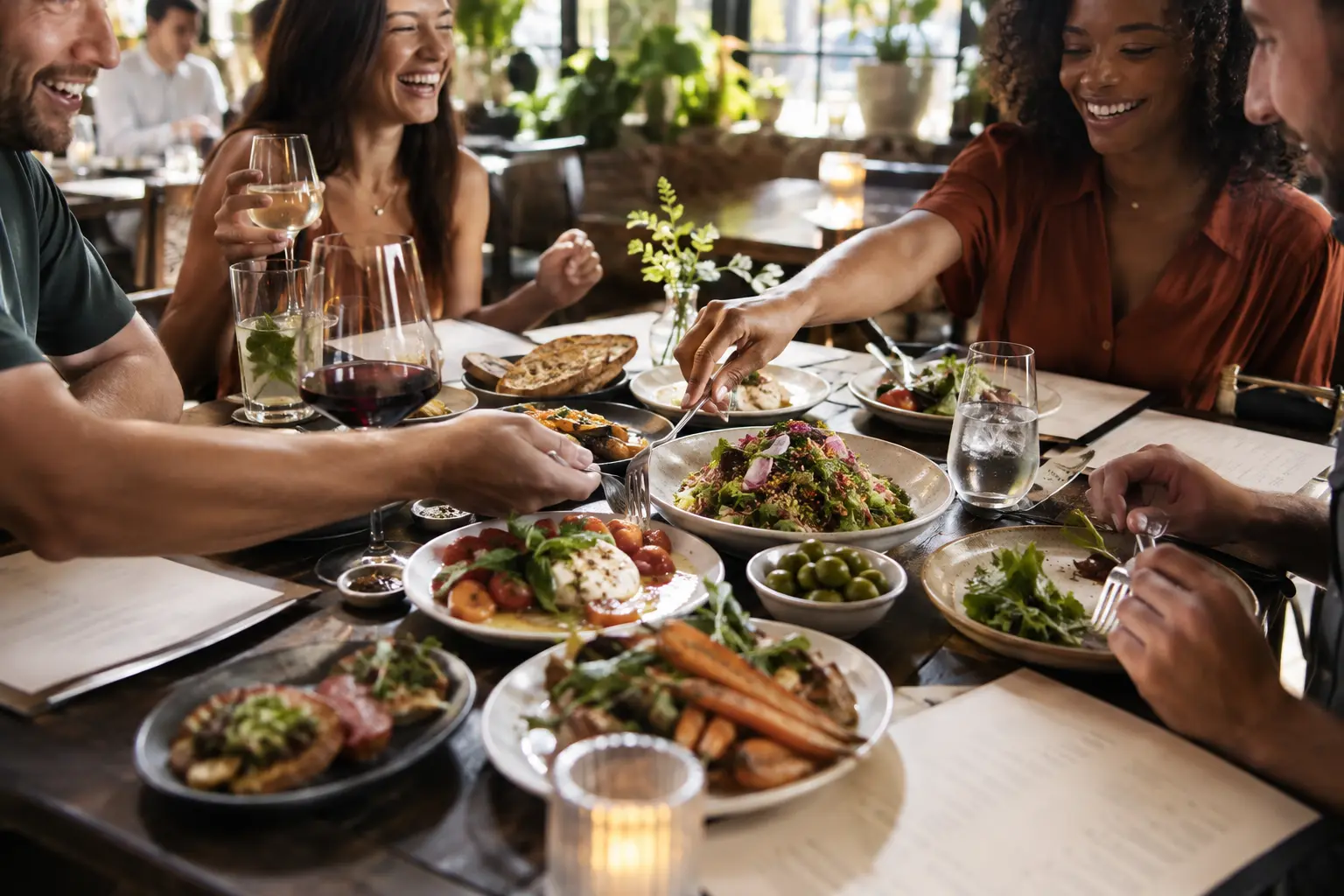
A memorable meal with friends depends less on the trendiest table and more on how easily people can arrive, choose food, talk, and settle in. Thoughtful planning removes friction before anyone sits down, leaving the evening free to feel spontaneous.
Start with the purpose
A birthday dinner, a reunion, and a quick weeknight catch-up need different rooms. Decide whether the priority is conversation, celebration, speed, a specific cuisine, or accommodating a larger group. A lively counter-service spot may be perfect after a game but frustrating for an intimate conversation.
Ask only the questions that shape the choice: approximate budget, dietary needs, neighborhood, and two possible dates. Too many open-ended options create work for everyone. Offer a simple proposal people can react to.
Choose for the whole table
Scan the menu before booking. Look for several dishes across the group’s price range and clear choices for allergies or dietary preferences. Restaurant offerings and prices change, so check the venue’s official page or a dependable menu reference close to the date. A resource that collects current restaurant menus can make early comparison easier, but confirm time-sensitive details directly with the restaurant.
Think beyond food. Noise level, seating style, stairs, parking, transit, and closing time affect whether guests can relax. If someone uses a mobility aid or has a serious allergy, call the restaurant with specific questions rather than relying on assumptions.
Make the invitation complete
A useful invitation includes the date, start time, restaurant, address, occasion, expected cost range, and a reply deadline. Say whether partners or children are included. If the restaurant holds a card for the reservation or adds a service charge for large parties, mention it early.
For a casual meal, clarity can still sound warm: “I’d love to catch up over dinner next Thursday at 7. I’m thinking of Loma on Fifth—most mains are $18–$28 and they have vegetarian options. Can you let me know by Monday?”
Book with a margin
Reserve once you have a reliable count. Ask how long the table is held, whether the full party must arrive before seating, and whether checks can be split. For large groups, learn the cancellation policy. Share those details without turning the invitation into a rule sheet.
Choose a time that respects the group. Parents of young children may prefer an early dinner. Friends traveling across a city need a buffer after work. A fifteen-minute arrival window can reduce the awkwardness of one person guarding an empty table.
Plan the money conversation
Unspoken payment assumptions create more tension than a direct sentence. If you are hosting, say so. If everyone will pay for themselves, make that clear. For shared plates, check whether the group is comfortable splitting evenly before ordering expensive extras.
One person can pay and receive transfers, but only if they volunteer. Keep receipts simple and account for tax, tip, service charges, and any deposit already paid. Generosity should feel freely offered, not silently expected.
Help conversation breathe
At the table, avoid making one guest perform the role of storyteller all night. Introduce people with a point of connection rather than a résumé: “You both restored old apartments,” or “You each know the best weekend walks.” Then let the conversation find its own direction.
Phones are useful for photos and practical checks, but constant screen attention fragments the table. You do not need a formal rule. Put your own phone away and give the person speaking your eyes. The social tone is often set through imitation.
Respond gracefully when plans shift
A guest may cancel, the table may run late, or a dish may sell out. Decide in advance which details truly matter. If the restaurant is delayed, take a short walk or order a drink nearby. If a guest cancels, respond with warmth before discussing money or reservation fees.
Hosts influence the emotional weather. Treat small problems as solvable logistics rather than evidence that the evening is ruined. The group will usually follow.
End well
Notice when the meal has reached a natural close. People may have childcare, early work, medication schedules, or long journeys home. Ask if anyone needs help arranging transportation. Settle payment before the energy becomes scattered.
A short follow-up the next day completes the gathering: thank people for coming, share one good photo with permission, or mention a moment you enjoyed. If someone could not attend, include them without making them feel guilty.
The compact planning checklist
- Define the occasion and atmosphere.
- Confirm budget, dietary needs, accessibility, and area.
- Offer two dates and one strong restaurant option.
- Check current menu, hours, and reservation policies.
- State payment expectations clearly.
- Send one concise confirmation on the day.
The best gathering is not the one with the most elaborate plan. It is the one where practical details quietly support connection, then disappear from view.
Plan for dietary needs without spotlighting anyone
Ask privately about allergies and restrictions, then choose a place where the person has more than one acceptable option. Do not turn their needs into a table discussion or expect them to negotiate with the kitchen on arrival. For serious allergies, invite the guest to review the restaurant choice and contact the venue directly.
If you are ordering shared plates, keep serving utensils separate and confirm ingredients. A beautiful communal meal is not successful if one guest must quietly go hungry.
When children are included
Earlier times, shorter meals, quick access to food, and forgiving noise levels help families relax. Ask whether a high chair or booster is needed and mention stairs or tight seating. Parents know their children; offer useful information rather than predicting what they can handle.
Bring one simple table activity if appropriate, but do not expect children to disappear into entertainment. Include them in conversation with small questions and allow movement when the setting permits.
A backup plan worth having
Save one nearby alternative that accepts walk-ins. Check the weather if seating is outdoors and know where the group can wait. Keep the restaurant phone number and reservation confirmation accessible. These preparations take minutes and prevent a small disruption from becoming a group debate.
If someone is running late, order only with their permission. If the kitchen is overwhelmed, treat staff with patience and ask for a realistic update. The way a group responds to inconvenience often becomes more memorable than the original plan.
Hosting at home instead
Apply the same principles at home: provide the start time, address, parking or transit details, menu outline, and what guests should bring. Cook one dependable main dish and accept help with sides. Set out water before people arrive and prepare a place for coats and bags.
Do not apologize for every unfinished detail. A home gathering can feel generous without matching tableware or an elaborate menu. Clean the bathroom, clear the main surfaces, adjust the lighting, and focus on greeting people calmly. Hospitality is the feeling of being expected.