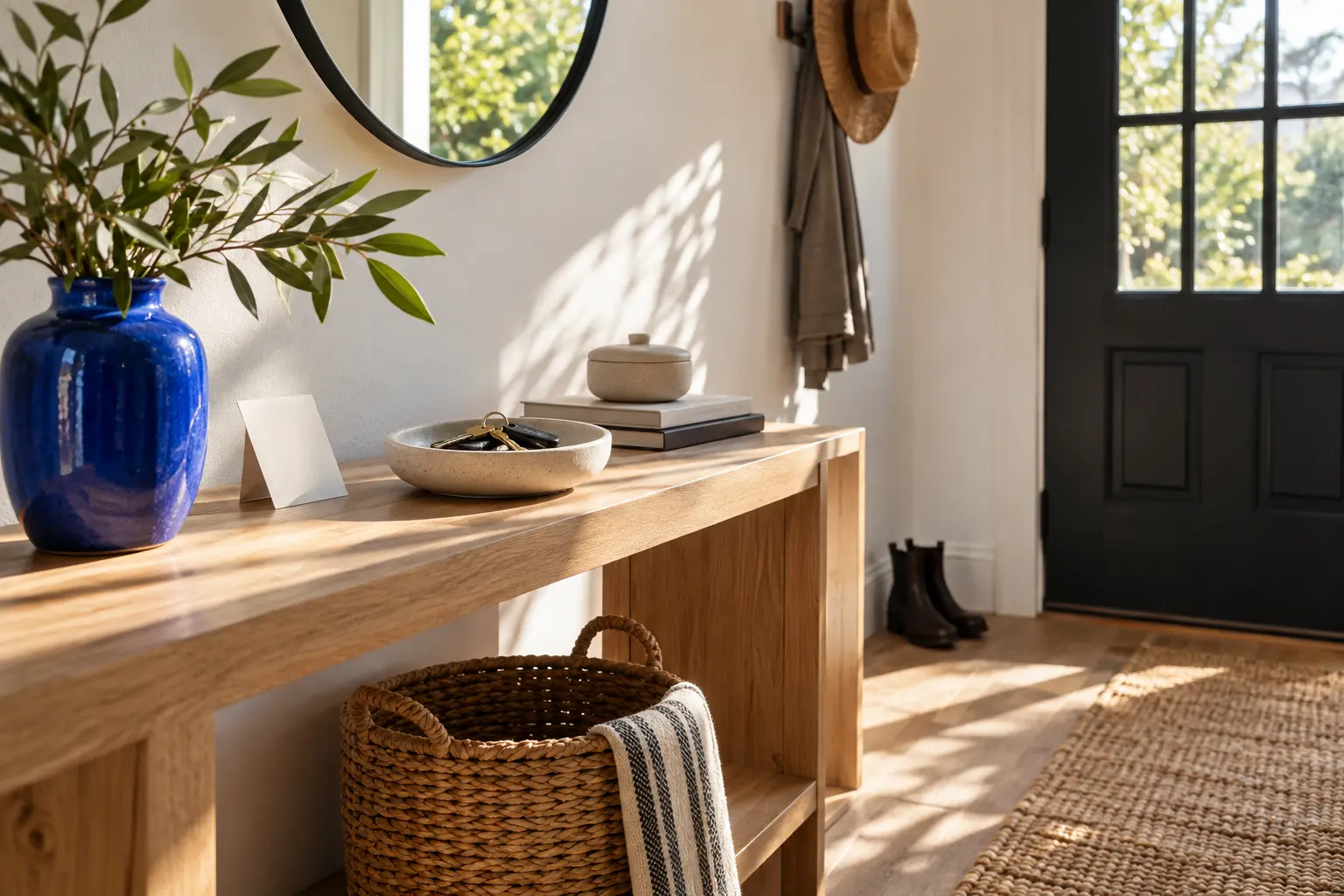
Good everyday design is often invisible. The keys are where your hand expects them. The lamp turns on before you cross a dark room. The information you need appears before the choice you must make. These small arrangements reduce repeated friction without demanding a dramatic renovation.
Observe before buying
For three days, notice where objects pile up, where you retrace your steps, and which tasks begin with a search. Those points reveal a mismatch between the environment and actual behavior. A basket bought before observation may become another object to manage; a shallow tray placed where keys already land may solve the real problem.
Record annoyances in plain language: “I cannot see the black cable against the dark shelf,” “mail has no temporary home,” or “the kitchen towel is out of reach when my hands are wet.” Specific problems invite modest, testable responses.
Design around the sequence
Arrange items in the order a task happens. Coffee filters belong close to the machine, not in a distant pantry selected by category alone. A dog-walking station might hold the leash, waste bags, a small towel, and a hook for a jacket near the exit. The goal is to reduce crossings and interruptions.
Sequence matters in digital spaces too. Put the requested action after the information needed to make it. Name files so they sort predictably. Keep the current version in one known location. Every unnecessary choice uses a little attention.
Use contrast as information
Contrast directs the eye. A dark bowl on a pale entry table is easier to find than a matching one. A bright label can distinguish similar containers. Larger type and generous spacing help people scan instructions. Contrast should carry meaning, not decorate every surface.
Test important information in imperfect conditions: from across the room, in low light, without glasses, or while holding groceries. If it matters, it should not depend on subtle color differences alone.
Put frequent things within easy reach
Prime storage belongs to objects used every day. Seasonal serving pieces can live higher or farther away. This sounds obvious, yet many rooms are arranged by tradition rather than frequency. Moving one daily item from a high cabinet to a waist-level drawer can remove hundreds of awkward reaches each year.
Accessibility benefits everyone. Lever handles work with full hands. A bench near the entrance helps with shoes. Clear paths reduce trips. Captions make video useful in noisy rooms as well as for people who are deaf or hard of hearing.
Create visible cues
A cue turns intention into a next action. Place a book on the pillow if you want to read before sleep. Put a filled water bottle beside the bag you take to work. Keep a donation box open in a closet so unwanted items have an immediate destination.
Cues work best when they are calm and limited. Too many notes become wallpaper. Choose one signal for each high-value routine and remove it once the behavior is established.
Leave useful empty space
Empty space is working capacity. A clear section of counter receives groceries. An open calendar afternoon absorbs delays. A shelf with room to grow makes returning items easier. Filling every edge may look efficient in a photograph while making real use more difficult.
Give active areas a reset point: one open chair, one clear desk zone, or one drawer that is not packed tightly. The room can then recover quickly after busy periods.
Choose reversible experiments
Before drilling, painting, or purchasing custom storage, test the idea with what you own. Move the lamp. Use a cardboard box as a drawer divider. Tape a paper label in place for a week. Good design emerges through use, not prediction alone.
Ask after each trial: Did this remove steps? Can everyone in the household understand it? Is it easy to maintain on a tired day? A solution that requires constant discipline is probably incomplete.
Respect different minds and bodies
One person wants belongings visible; another feels calmer when surfaces are clear. Children need storage they can reach. Memory, vision, strength, and attention vary within a household and across a lifetime. Discuss the friction without blaming the person experiencing it.
Shared spaces often need more than one pathway: an open hook for the person who will not use a hanger, plus a closed closet for visual calm. The strongest arrangement is the one people can actually follow.
A room-by-room starting point
- Entry: create a landing place for keys, bags, and mail.
- Kitchen: group tools by task sequence and frequency.
- Bedroom: make the evening routine easy in low light.
- Bathroom: keep daily items reachable and wet items ventilated.
- Workspace: separate the current task from long-term storage.
Daily life improves through dozens of modest encounters with the environment. Fix the repeated irritation first. Let beauty join usefulness, and let both serve the people who live there.
Improve instructions and labels
A label should answer the question a person has at the moment of use. “Returns—receipts inside” is more helpful than “Miscellaneous.” Use familiar terms, readable type, and consistent placement. If a container is opaque, identify both contents and any date that affects safe use.
Instructions work best as short actions in order. Start each step with a verb. Place warnings before the risky action, not after it. When possible, show the completed state so a user knows when they are finished.
Light the task, not just the room
General ceiling light often leaves shadows exactly where hands are working. Add a movable lamp near reading, food preparation, repairs, or grooming. Reduce glare on screens and glossy surfaces. Night lighting should reveal changes in level and the path to a bathroom without fully waking the household.
Daylight changes through the year, so revisit placement in another season. A desk that is comfortable in winter may receive harsh summer sun.
Design for maintenance
Every object and system creates upkeep. Before adding storage, ask how it will be cleaned, refilled, repaired, or removed. Open shelves make items visible but collect dust. Deep bins hold more but can hide what is inside. Select the tradeoff that fits your energy.
Place cleaning tools near frequent messes. Keep spare liners at the bottom of a waste bin or a cloth near the entry during rainy months. Maintenance becomes easier when the response is part of the setup.
Audit one repeated journey
Choose a journey you make every day: waking, leaving home, preparing lunch, beginning work, or going to bed. Walk through it slowly and count stops, searches, reaches, and decisions. Pick the most irritating one and change only that.
After a week, decide whether the change genuinely helped. Keep it, revise it, or restore the old arrangement. This small cycle—observe, test, live with it, and adjust—is everyday design at its most useful.