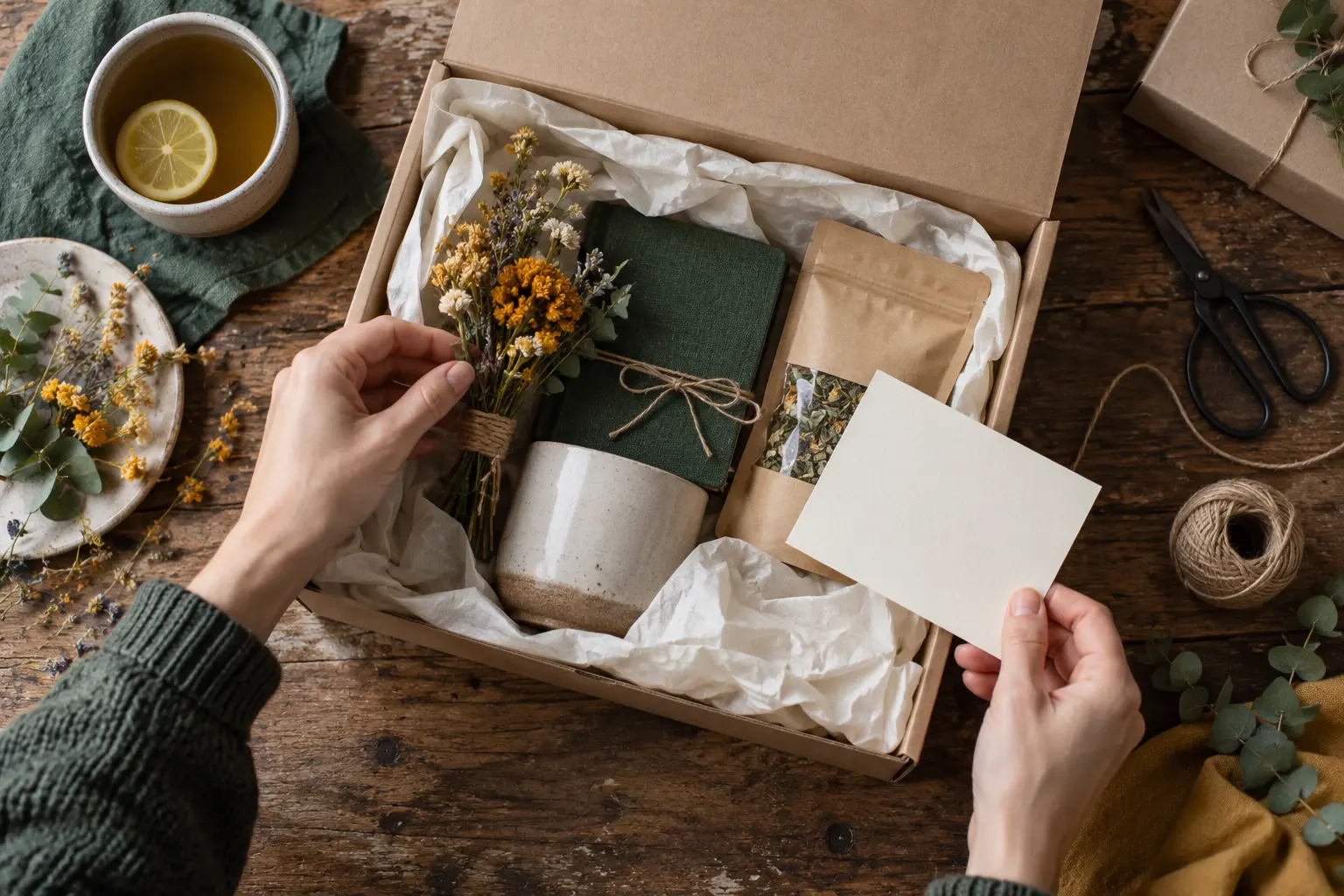
A care package is a message made physical. Its value is not measured by the number of items inside, but by how clearly those items reflect the recipient’s present life. A useful snack, a familiar scent, or a note that names what they are facing can carry more feeling than an expensive assortment.
Begin with the situation
Ask what the package is meant to do. Comfort someone after a loss? Welcome a student to a new city? Help a friend recover from surgery? Celebrate a demanding milestone? The answer guides every choice.
Consider practical constraints: allergies, storage space, mobility, dietary rules, climate, children, pets, and whether the parcel will travel. When unsure, ask a close family member or choose flexible, clearly labeled items.
Choose a simple organizing idea
A theme creates coherence without requiring matching products. You might build around “a quiet evening,” “first week in the new apartment,” “exam-day support,” or “small comforts for recovery.” Select three to five items that serve that idea in different ways.
For a quiet evening, include tea, a soft pair of socks, a short book, and a handwritten note. For a new apartment, try a local snack, a compact tool, removable hooks, and a list of nearby essentials. Practicality and delight can share the same box.
Use the senses thoughtfully
Texture, scent, taste, and color make the opening memorable. Yet sensory choices are personal. Strong candles or perfumes may trigger headaches. Food may conflict with allergies or medication. Choose gentle items unless you know the recipient’s preferences well.
A tactile object—a smooth pocket stone, a soft cloth, or a small notebook—can provide comfort without taking much space. One accent color in tissue or ribbon gives the package a composed look without turning it into a commercial gift basket.
Write the note first
The note gives context to everything else. Write it before shopping so the package grows from the message rather than replacing it. Name the reason you are sending it, acknowledge the recipient’s reality, and remove any pressure to respond.
For difficult moments, try: “I know this week has asked a lot of you. I put together a few things for quieter evenings. There is no need to write back—I’m here, and I’ll check in again on Friday.” For celebration, mention the effort behind the milestone and one quality you admire.
If you need a starting line, browse warm words for meaningful moments, then rewrite the idea with a detail only you would know. The final note should sound like your relationship, not a greeting-card aisle.
Prioritize usefulness
Consumable and multipurpose items are helpful when the recipient has limited space. Tea, shelf-stable snacks, hand cream, postage stamps, a meal-delivery credit, or a small household basic can be used and finished. Avoid giving someone a project unless they enjoy that activity.
Support can also be local. A care package does not have to be mailed. Leave a labeled freezer meal, return library books, include a transit card, or provide a written offer for one specific errand.
Pack for the actual journey
Place heavy items at the bottom, seal liquids in separate bags, cushion glass, and fill empty space so contents do not move. Keep food apart from scented products. Remove old shipping labels from reused boxes and reinforce seams with packing tape.
Check postal restrictions for the destination, especially for international shipments, plants, homemade food, alcohol, batteries, and aerosols. Include the recipient’s address inside the box in case the outer label is damaged.
Make the opening easy
A beautiful package should not require strong hands or sharp tools to enter. Avoid excessive tape around individual objects. Add short labels only when an item’s purpose is unclear: “for the first cold morning” or “open when you need a distraction.” Keep those notes brief so they feel like discoveries.
If several people contributed, include their names. Do not photograph or post the recipient’s reaction without permission; the gift belongs to their private moment.
Think beyond the box
The package can begin a pattern of care. Set a reminder to follow up after delivery. Ask what was helpful before sending another. In grief or illness, attention often peaks early and disappears while the need continues.
Sometimes the most thoughtful choice is not an object. Pay for laundry service, arrange a grocery delivery, offer transportation, or schedule an unrushed call. Match the gesture to the person rather than to an ideal image of generosity.
Final checklist
- Does every item fit the recipient’s current situation?
- Have you checked allergies and shipping restrictions?
- Is the note specific, honest, and pressure-free?
- Can the package be opened and stored easily?
- Have you planned a follow-up after it arrives?
A strong care package says, “I noticed what this season asks of you.” When attention leads and objects follow, even a small parcel can feel deeply generous.
Ideas by circumstance
For recovery: consider easy snacks, a washable eye mask, unscented lotion, a long charging cable, and a note offering one concrete errand. Avoid medical promises or products that could interact with treatment.
For a student away from home: include a favorite shelf-stable food, laundry credit, basic cold-weather items, printed photographs, and a small local guide. A compact package respects limited dorm storage.
For grief: choose food that requires little preparation, tissues, a simple comfort item, and a memory of the person who died. Avoid language that explains the loss. Plan another contact after the first weeks.
Set a budget before shopping
Care is not proportional to cost. Decide a total that includes packing and postage, which can exceed the price of the contents. One high-use item and a sincere note may be more welcome than a crowded box of small novelties.
If friends contribute, assign categories and one person to coordinate. Shared generosity should not create duplicate items or put financial pressure on participants. Let people contribute time, a message, or delivery help as alternatives to money.
Respect consent and boundaries
Confirm the address and whether receiving a package is convenient. Someone leaving an unsafe situation, staying in temporary housing, or managing a private diagnosis may not want an unexpected parcel. Ask discreetly and do not reveal the reason for the gift on the outer label.
A package should not obligate a visit, public thank-you, or immediate reply. Include a pressure-free sentence and mean it.
After delivery
Track the shipment and send a simple heads-up. Do not ask the recipient to perform enthusiasm. A week later, check whether the items suited them and whether a different kind of help would be better.
The follow-up turns a one-time gesture into dependable care. The box opens once; the relationship continues.